The companies that make up the AI bubble

Business of Apps has gotten into the geography of AI businesses. The image above is the result of their efforts.

What type of AI use will make it more that chat windows?

In my opinion, the creative side of AI is probably the most important here. While productivity is important, it is art that will make these AI tools truly powerful. It needs to be able to create images of any type quickly and without issues. The smartphone got popular with people because of the camera not because of the productivity apps; that appeal came later not before.

It is because of the camera that the iPhone was able to get smartphone to become more than an adjacent object and into a digital swiss army knife. Such a phrase was used early on and I can understand why. Unlike the flip phones and the older phones, the smartphone is usable in many situations. Mobile banking is useful for many age groups and the smartphone removes the friction which existed on other types of phones and gives you an “app” to do look at your bank account which is important in this age.

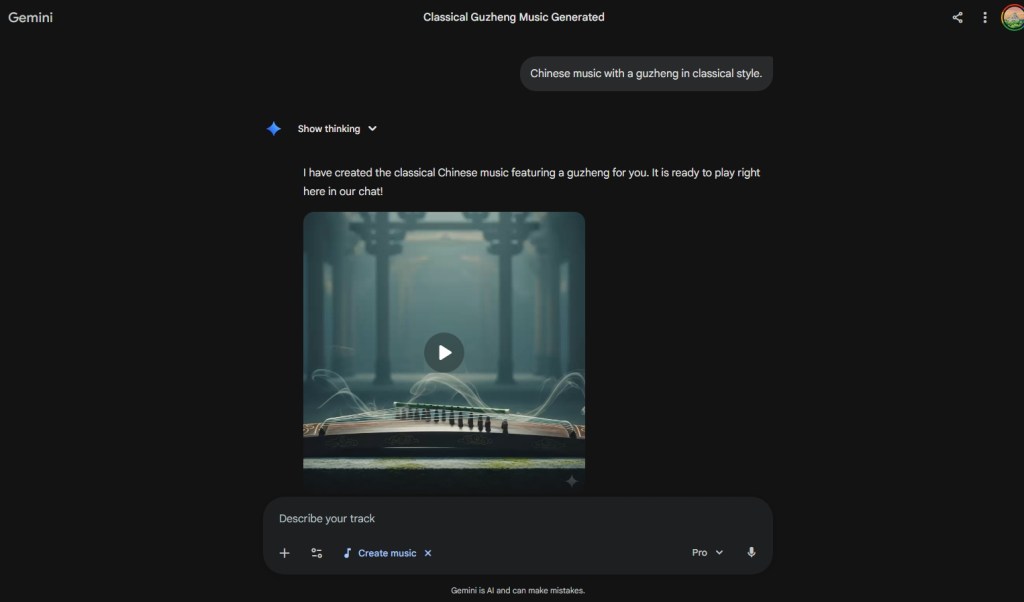
Music is tricky area with AI. I have not used Suno as much here but its already seemingly getting on the Billboard charts. If you had asked average people that computer made music would have gotten their attention, they would have been skeptical. We have had sites for many years serving up tracks on the internet and before that in the music stores.

Music is another area where AI usage could really become embedded in our society just as the car or electricity. I do not believe AI will become a “microwave” where it will be there and used for many things but not transform our culture. It will not just be addition to our gadgets; it is going to replace many gadgets we have. In the realm of music, it seems that we have a greater variety of genres and experimentation than ever before in my opinion.

Suno is getting sued by many record label companies. Hopefully, they do not end up like Napster and are able to survive. I think the concept behind AI music is great and can really open people to different genres and make the creative process more interesting and enliven it with some iconoclastic energy which has been lacking for many years in our age.

Creativity I think is going to be what makes AI more mainstream. Productivity is not what gets views on YouTube; the views come from youtubers who make people imagine and cultivate their minds. AI is going to change the nature of creativity and I am confident it will not replace it but augment it. We may not have cybernetic implants yet but this is virtual kind and its truly remarkable to have these tools to revive our civilization.

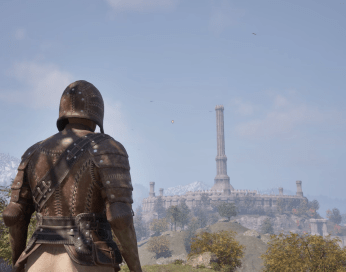
Oblivion’s AI is still remarkable and still influences games today.

In the Imperial City Arena District, you can see an Argonian male and a Redguard Female fighting each other. They are not in combat but in a script where has them train each other in hand to hand combat at specific times of day. Watching them for a bit gives you +5 boost to your hand-to-hand combat skills; such attention to details and interaction with the world is rare in video games.

When people talk about video games outside gaming, it still seems to be in a time warp of the 1980s. Most of the media newsmongers have no understanding of video games or even seem want to care about it. There is so much potential in the medium, yet it seems to be ignored, which I think it is sign of how video games have retained their renegade status. While men in suits attempt to continue monetizing it, video games are similar in a sense to Gladiatorial games in Ancient Rome. In comparison with chariot racing, Gladiatorial games were not as popular but had more of a cultural impact that the elites did not want to admit. Video Games linger in the shadows of the more acceptable entertainment of Television and Movies. However, it’s in video games where we see the future of storytelling going towards, beyond the linear and static movies of the past. While movies have a place, the medium is so stagnant that there is little in feature films which can change. It is in video games where you see real change.

The change is in the graphics and more recently in the AI.

With all the hype surrounding AI or Large Language Models (LLMs), gamers saw the first salvo in the spreading of AI throughout our societies.

The Radiant AI in Oblivion and Skyrim were quite competent here. They are still in the early stages of showing us what is possible in video games. The cities and villages have more life than anything you see in Cyberpunk 2077, which for me was a big step down from we saw with the Witcher Games.

You can see the influence of Radiant AI in GTA VI’s ambitions.

Seeing the Argonian and the Redguard train in the arena was just the preview of how AI can transform games as much graphics were able to do so in the 1990s. We will have more than just games but living simulations.

Google Search and the Paywall: A consequence of near monopolistic power

Google is a company that has been controlling the search market in its grip for well over 20 years at this point. While the company offers many convenient services, it has also become a monopoly. Some people would disagree with that but the company is one and also is also dominating in mobile phones with the android operating system. There is a need for the internet to untangle from this monopolistic system that Google has made. Just for the interests of keeping the internet interesting and useful for many types of people, that is important. However, one of the main reasons why I am focusing on this issue is because of paywalls on news sites.

Paywalls used to be rarer in the past. Only really the WSJ (Wall Street Journal) had them in a significant way. However, as time has gone on and the internet went from a place for bragging rights to a necessity for someone to be able to have a journalism career, paywalls have been going up across cyberspace. The building of walls across the internet feels like an admission of failure of the internet’s ability to reduce the cost of producing news. I have seen it in real-time here; this is not a change that one sees through generations but it happened after 2008 and we have seen more and more paywalls.

Google’s inability to categorize paywalls is huge issue. Their unwillingness to categorize websites to make it more useful to the public shows their institutional inertia. The company makes billions upon billions of dollars on advertising, yet it is unable to even pay attention to its search engine that made it popular in the 2000s.

Why is Google so unwilling to change?

It’s because they are comfortable in taking ad revenue from sites. Changing that revenue stream would make them take a hit and they can only tolerate having more and more revenue streaming into it.

If Google was to take its search engine seriously, it would take a hit to its reputation. It would have to respond to all the calls about it having a monopoly on the internet and manipulating people’s minds. They would have to make the legacy outlets which seek to maintain their power have to play by the rules rather just allowing them to regurgitate what the ruling parties want to see.

Paywalled sites do need to not show up in the search results. Many of these sites are business sites that often hide their arcane language away from public view. The internet should be divided up into small kingdoms where you have to pay entry fees to get into the castle.

Google’s unwillingness to categorize such things show that monopolies that hold onto power for so long have a way of shaping the whole culture around them. The internet, once free and vibrant, is becoming yet another shopping mall where everything has a price.

Having free access to information on the internet isn’t a right but essential aspect to cyberspace.