Modern RTS games have no equivalent: The Cardassian Interface in Star Trek – Armada II

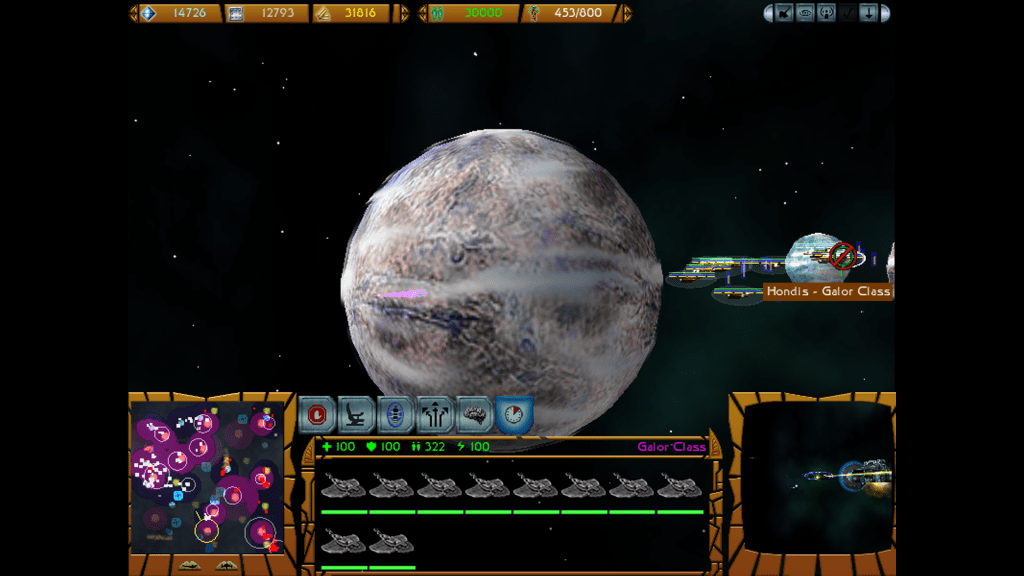
Star Trek - Armada II planet

The Cardassian race in the Star Trek series made its appearance on the overly idealistic Star Trek: The Next Generation and represented a new foe for the Federation. They were a mix of Klingon and Romulan and they were militaristic but also had an artistic side to them which made unique. Unlike most of the Science-Fiction stories made now, Star Trek was good at making races that were not too alien but alien enough to create a futuristic version of real-life politics. The Cardassians would reach their peak of influence on the franchise in Star Trek: Deep Space Nine. The series would show them as the tragic villains being manipulated by the Dominion and cause the fall of the great civilization due to the arrogance and corruption of the military classes.

Much like Star Wars, the Cardassians would have distinct style and feel to their ships. Just as the Neimoidian in the Phantom Menace would hide in their ships with mighty droid armies marching on Naboo, the Cardassians had their own approach to how they built their ships and the interfaces on them.

Star Trek – Armada II incorporates Cardassian lore into the game with such stylistic beauty that you could hardly believe that this game is over 20 years of age. Once you think about it, you become nostalgic and wonder how the Video Game industry has become stuck in the mud. It cares more about past glories and not building anything new or even respecting its past without covering it over with a facade which is inferior to the original product that gamers enjoyed in those previous generations.
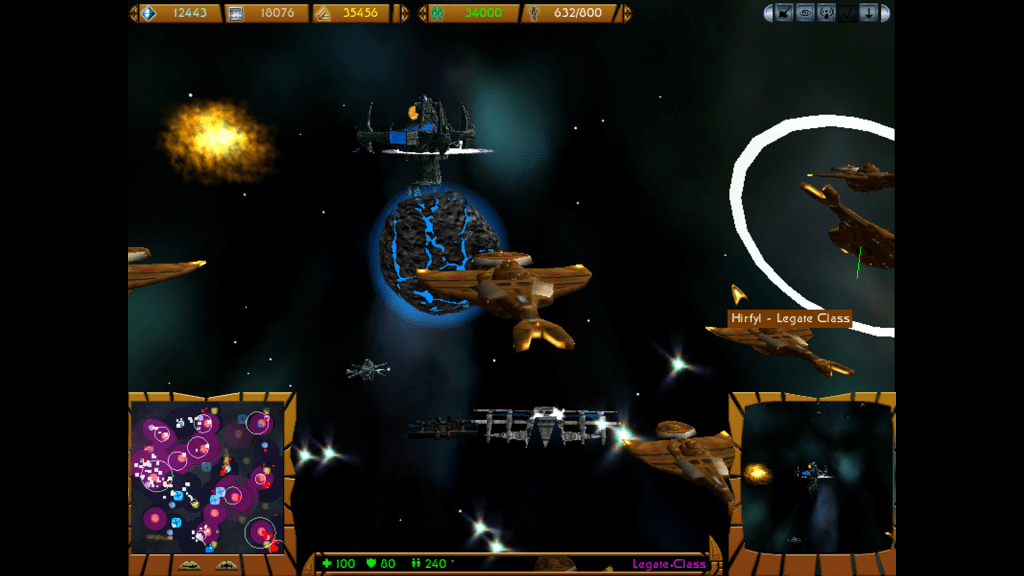
Cardassian Legate Class firing artillery at a Klingon base.

The Cardassians were introduced in Star Trek – Armada II and they are quite a joy to play.

However, the main I want to emphasize here is the sound design of the interface.

In video games, the interface can make a break even a good game.

The sound design within the clicking of the keys and hovering over the interface is integral to a building a wonderful experience for the player to get immersed in.

The interface sounds of the Cardassians is very oppressive sounding, as if the Obsidian Order is watching your shoulders.

In 2001, only a couple years separated Star Trek – Armada II and the release of Dune II, the first true RTS game. Star Trek Armada II in many ways was released at the pinnacle of the RTS genre. Empire Earth was released in the same month as Star Trek Armada II. Warcraft III, was released earlier in that year, giving Blizzard the confidence to then unleash World of Warcraft onto the MMO genre and then seize it like ancient conqueror. These are only three of the any RTS games released in that year.

What is even more remarkable is that Star Trek – Armada II was released a year after Star Trek – Armada in 2000. The sounds on the interface in the OG Armada were more basic. Within a year, they managed to have unique sounds and art style for each race; they did not just copy the original game, they made something new while respecting the OG Armada.

Such an accomplishment goes beyond the brand of this science-fiction franchise but shows what the video game industry needs to reclaim so that people can enjoy video games with passion once again.

What Starfield has that Skyrim does not have

Skyrim gets much attention and praise as an incredible game. Many videos on YouTube have given the impression that its a great game. I somewhat agree with this, mainly because of how the game makes the player feel like they are in the province of the Nords. However, the game quickly becomes stale, and the most glaring issue is that its wilderness lacks depth outside the frozen northern section of the map. The cities are also too small and feel like afterthoughts in the game. People tend to overrate this game and ignore that came out. The reason that it’s so popular is the same reason that people are so nostalgic about Mario 64. It is a game that people had the most exposure to and its aesthetics, while quite colorful have put gamers into a bind where the only thing they care about is small slice of styles in games.

Starfield is a game that seeks to create a new course for Bethesda. While they respect Skyrim and the immense success it has given them, they want to try new things. Gamers have a tendency to go back and forth on this issue. Skyrim was more streamlined in comparison to any other Elder Scrolls game. However, Starfield seeks to combine cozy with a Role-playing game.

That sense of cozy is one of the unique aspects of Starfield which people are not paying enough attention to when talking about this game.

Starfield is not a game for everyone. I get such sentiments about it.

However, what is has that Skyrim does not have is the sense of being a game that does not have high stakes. What matters is the exploration for its own sake.

Why the Video Game Reviewers need to stop proping up bad or mediocre games

There is general idea among regular gamers that professional reviewers are basically being bribed to push game sales. While we cannot say that this is the truth in every instance, it is clear that there many journalists are no longer able to review games without trying to use them to prop up their factions in culture wars.

It seems to me that the video game reviewers have become more like political activists rather than people who are actually trying to play the games and show their thoughts on it.

Some of it is a cultural change in our culture. The video game industry was seen as a not serious industry by many governments. It was simply part of the entertainment industry, which in the highly technocratic era of the Post-World War 2, was not seen it as a threat to their power. However, more recently, people have started to take a closer look at video games.

Politics and video games do not really mix as video games unlike movies, were truly seen as diversions not were taken up by the avant-garde. This means that video games have been more a product of middle-class values and concepts

However, more recently, people who tend to be more political have been getting more interested into video games. With this attention, they are bringing along the baggage which has been hurting the industry and its ability to make games.

What we need to is to return to when Video Games were made for people playing games.

We do not need activists in our games. Neither should they be in any form of media. Activism in this age seems more of a way to help one’s side of an oligarchical system in America.

Video games should return to being about entertainment and telling an inspiring story that matters to people of all ages, races and abilities.

When the video game industry and its critics manage to stop being so elitist, then the industry will be able to make great games that people will purchase and cherish.