
Why Netflix is not the new cinema

The box office seems to be coming back to life now. Five at Freddy’s and Zootopia 2 are battling it out with other movies such as Wicked for Good and some other stragglers. It seems that the studios are pulling out the big guns in order to save this year so that they can make up some of the money they didn’t have in the previous parts of the year here.

I remember years that Netflix would release new titles and it would garner attention. Now, it seems that they are attempting to hold onto their audience rather build it. This explains why they began punishing people who were sharing passwords and putting ads on the cheapest tier. This is adding to the expense of using Netflix and other streaming services. Instead of having one or two places to watch content, you now have them in so many places.

This is not a great arrangement for people now, especially with the novelty of streaming not as strong as before here.

Netflix’s inablity to make originals which match Hollywood’s early output is telling.

Where is Louise Brookes of Netflix? Simple answer: The culture is simply not there.

The idea of having a Charlie Chaplin or Joan Crawford is not happening in the Netflix age. The people who started Netflix were Silicon Valley who didn’t like Blockbuster’s return policy. They managed to create rental giant which became a streaming giant here. They were just interested in a business more than the art. It wasn’t until they began making originals that the art became more important; it was still subordinate in sense to a third concept, the information and archive culture of our age.

Netflix was more interested in using these shows to sell data back to the people who made the content rather than the artistic quality. A few shows and movies could have been seen to be of classic Hollywood quality, but there are not that many shows that reach the brilliance of Hollywood of many decades ago. Maybe of our age but Netflix is going to have be better than that, not just an addition.

Netflix is simply not the new cinema but more of a upstart which thinks it is. They have had successes but most of these were in the beginning of their time of making originals. They are just pumping out more reality television than ever before. Emily in Paris may appeal to many people but Netflix needs to really start focusing on creating artistic movies which can appeal to their audience.

They have a huge audience and yet they make the same content as one saw on the old broadcast channels.

Netflix will continue to gain subscribers counts but it needs more creativity if it wants to retain that audience.

Investors and tech guys generally do not care about creativity. Only investments. Netflix needs to learn how to treats is originals as something more than images on a screen.

Why Empire Earth is better than most Modern RTS Games

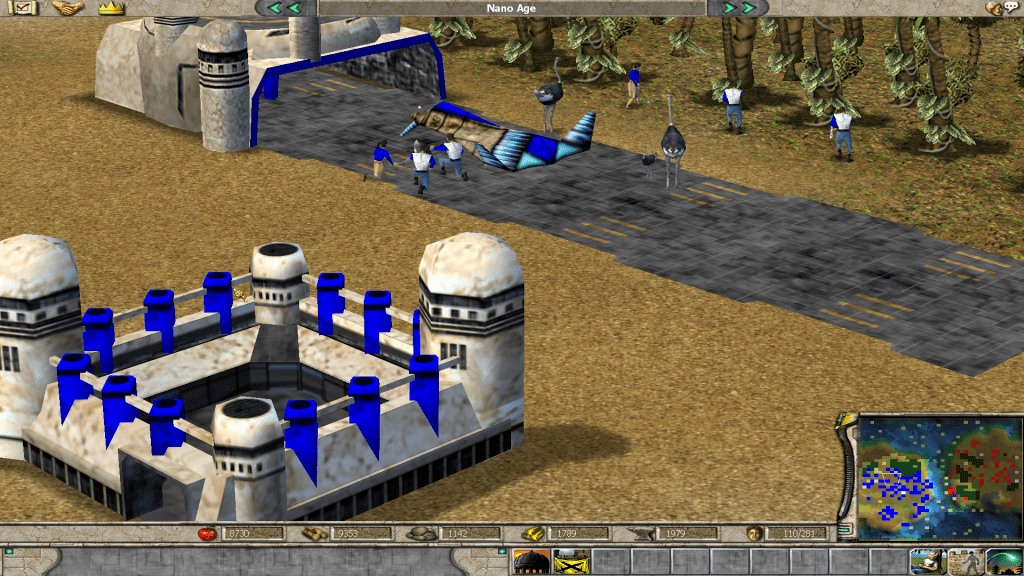
The Intro Screen of the Russian Campaign in Empire Earth

The Russian Campaign in Empire Earth is one of the reasons why I still love playing this game. I have not actually won the campaign even after so many years. However, its the possibilities that the campaign has which still captivates me. The ability to have a science fiction story set on Earth rather than space in an RTS was a great accomplishment. Regardless of the quality of the voice acting or the plausbility of the story, the campaign is known as the hardest in the game. You really get a sense of a futuristic struggle between Russia and America and other nations which you rarely get to see.

Why is that we cannot see that with modern RTS games. The only RTS game recently to accomplish any dynamicism in its design while honoring the past is Age of Empires IV. While Age of Empires III was in a beautiful obscurity, a middle child one could say, Age of Empires IV has regenerated the franchise and RTS games as whole. Starcraft II’s hold on the RTS genre along with other offshoot genres. However, one game cannot do it on its own here. There needs to be more RTS games out there as I see the genre as a virtual chess style game which can help enhance people’s minds here.

Instead of focusing on esports, maybe developers should focus on making their profits sustainable versus a constant stream which eventually tires out and then they have no artistic integrity. Video game companies need to start paying attention to the tension between art and business. Without capital, most art could not start but they should not let business take their soul away from their jobs. Such a compromise ends up damaging many businesses. Somehow, Japan, with its harsher corporate culture has managed to keep the soul of its IPs intact versus the West here.

Empire Earth has a been game that I have played for over twenty years. There is a reason why it stays with me. Nostalgia, a very much misused word in our age, isn’t really for software. It’s more for our physical places and the sense of time passing and a willingness to come back to it. The technical aspect of a video game isn’t what we are sentimental about here, but the atmosphere around playing the game. The game’s technical aspects are solid, not prefect, but better than what you see now, regardless of sentimental aspects surrounding our playing of the game.

Empire Earth has something unique about it. The AI cheats in the game, but it is competent and the battles, even when annoying are also exciting. There is something about the quality of the battles where every unit has a role to play, big and small. Unlike so many RTS games now, I feel the gameplay loop is similar to Skyrim’s. It has a mythic quality while still personable. This is an issue that Starfield had, where its huge nature made the player seem too small and not distinctive enough. This is another issue I have with Stellaris, inspire of its great gameplay. The mythic nature is so huge, that the player just seems to be clicking buttons on a screen.

What we need in video games again is a sense of personal stakes and personality again. Not just moving digital information on the screen.

The reason why Empire Earth is still played by players is really down to its technical brillancce combined with the memories of an industry that wasn’t perfect but knew how to make games over assets for investors in corporations.

Mastering Email Searches with Microsoft Copilot

Microsoft Copilot has been my favorite chatbot since it released under as Bing Chat in 2023.

One of the most interesting new features which has been included in the AI chatbot is the ability to search through your emails through context on the Copilot website. You do not have to open the email client or go on the website and use the chatbot already included in it. You can just simply go to the web version of Copilot.

To get your inbox connected to your Copilot account, you have to follow these steps.

In the chat window here, there is an icon that is here with the arrow.

Click on the icon and these options will appear.

These options allow you to connect your email account to Copilot. As such, you are training the AI model with your data and making it more usable to your specific needs here.

On my computer, I tend to have Microsoft OneDrive, Outlook and Gmail as connected to my Copilot AI.

To start, all you simply need to do is write out a prompt about emails and give context about your search. This isn’t just about keywords anymore, but you can write in generalities which makes this more precise than the old systems here.

Copilot Emails

When you get a result here, it will give you the list of emails according to your search. Links are included in search and when you click on it, it opens the web client to your inbox.

This is a very powerful feature in Copilot. Instead of opening your email client with tons of emails to sync into your inbox, you can simply search for them here. Instead of just looking at keywords, you can put context into your search, making it easier to see what you are looking at here.

In the image above, Copilot sometimes will organize your prompt’s answer into a chart. This is the most optimal way in order to look at your emails.

What makes this so powerful is that you continue the conversation. In earlier versions, you only had keywords to work on. Now, the AI provides recommendations at the end of each answer, giving you more opportunities to optimize your emails.

Writing specific prompts also allow you move beyond keywords in your search. Here is a clear example of how powerful Copilot is.

As you can see here, Copilot is capable of more than just listing your emails in chronological order or according to specific topics. It is able to be a secretary and provide context to each individual email in your inbox.

In comparison to earlier generations of Outlook, such a tool is going to make many White-collar professionals more efficient in their jobs. It will even add newer insights to their professional careers that they wouldn’t ordinarily have.

Copilot is an amazing tool which makes something so mundane and ordinary into something that has greater potential to unlock creativity and productivity in more workers.