The main issue that the video games have right now is that too many releases are expensive to make. In the past, it was cheaper to make video games, now these games are costing more than movies now.
So, what needs to happen? Well video games need to focus their ambitions. There needs to be a turn away from feature creep and towards making games more sustainable in here. Not every game needs to be trying to accomplish everything at once here.
Video Games need to really focus on being one thing first: That is, they need to be fun here. Once that task is complete, then we can talk about trying to add more depth to the game. However, too many game developers want to emphasize how complex a game is. They need to make sure it is in a playable state and also enjoyable. Complexity and creative ideas can then follow from that starting point here. The brass tacks of the playable experience have to be emphasized from the start not when the game rides on hype and then it has little to sustain its growth.
Not every game needs tons of voice actors.
Not every game needs photorealistic graphics.
What is needed is vision and good gameplay.
Many developers forget about this here. Some of it is the sheer amount of games that are released now. You have to find a way to stand out here. You need novelty more than before, more in gameplay than in graphics. However, gameplay that is novel for the sake of being novel isn’t always going to bring success for a game.
Money is an issue but people need to be more reasonable. A good game just needs effort and time and some money.
As always, good gameplay comes first before putting extra effort into other aspects of the game.
Marathon, Bungie’s new Extraction shooter was released today and one thing that I found really interesting was the artistic style of the game.
The original game, which was released in the 1990s was made in a style about the internet before the internet ossified into websites. Cyberspace was seen as a place not as infrastructure. That shows up in how the game appears. The neon lights and high contrast colors are divisive but to be honest, I rather this game have this style than having the earthy style that almost every high budget game seems to have in this age.
Marathon has been struggling with some players, who just see as more content than a creative vision being brought to life in our stale age. People have a right to be cynical here. However, I think that this game is better than all those independent games which are just copying those 16-bit games.
I think that games with a unique visual style is what we need more of in this age.
Growing up with Web 1.0, I think that that era gets unwisely maligned by people now. There was a lot more experimentation in that age and some styles would work and others would not. I think we need to be more charitable. The internet was seen as a place not entirely yet as a place dominated by money. We need to remember that mentality and I think we should try to recapture some of it here.
Marathon is a niche game, and I think Bungie was right to put the price at $39.99. This is the right price for a game which will be getting more content in more seasons. In comparison to Battlefield 6, they need to make sure that the player’s choices actually have an impact on the game and they respect the player base.
Too many games have been issues recently and it would nice to see AAA game have some success here.
Wild West Pioneers is a city builder game with a focus on resource gather set in the Western Expansion phase of the Old West in America.
Here are my ideas for the game.
1. Outlaws who harass the town
I think that many city builders are in two camps. The cozy ones and the ones where there is some outside pressure. The Caesar Series generally was based on having some pressure on the player while the SimCity series more of a cozy game.
Wild West Pioneers needs to have outlaws and their gangs running around in random events. These events should be based on multiple mechanics in the game. I think it would make the game more dyanmic and interesting. Many cozy games end up being chores and boring simply because the player is just looking at graphs and charts here.
2. More than just resources
One of the issues that I have with city builders in our age is that many of them focus too much on resource gathering here. There needs to be a focus on character not just looking at objects on a screen.
This is one issue that I have had with some of the Paradox games. They tend to be too focused on the charts instead of the characters and the story. City Skylines tends to have this issue also where the game is simply too clean and too much of a movie set. I want to see the life of the town, not just collect resources. Such a gameplay loop is more of something you see in the RTS genre, where base building is more important than the personality of the units or structures.
3. Every citizen needs to be unique
One thing that I want to see in the games is that there is a sense that every person in your town is unique. Considering that Wild West Pioneers is dealing with small towns, this should be something the engine can handle here. Virginia City and Carson City were rather modest but had huge personalities that one even struggles to find in some medium sized cities in our age now.
I think that the personality system is really important at cultivating replayablity so players have a willingness to spend more time exploring the game. Too many games tend to have shallow gameplay. Players want to not have work but to have an experience that they can remember. Video games are not meant to be jobs and the developer should remember that there.
4. Mayor system has to matter in the game
I have recently heard that the game is going to have mayors that you can choose. This mechanic should mean something in here. Make them have unique personalities and have different political parties so that the game is more unique in every playthrough.
5. Elections
I think that having elections in this game would give some more flavor to your towns. While I believe that the game will probably add more features in DLCs if it is successful in here, having elections would help make these playthroughs more dynamic and it bring it into line what players want now. With the size of these cities being smaller than most city builders, I think that this should be appropriate for this game.
6. Trains need to play an important role
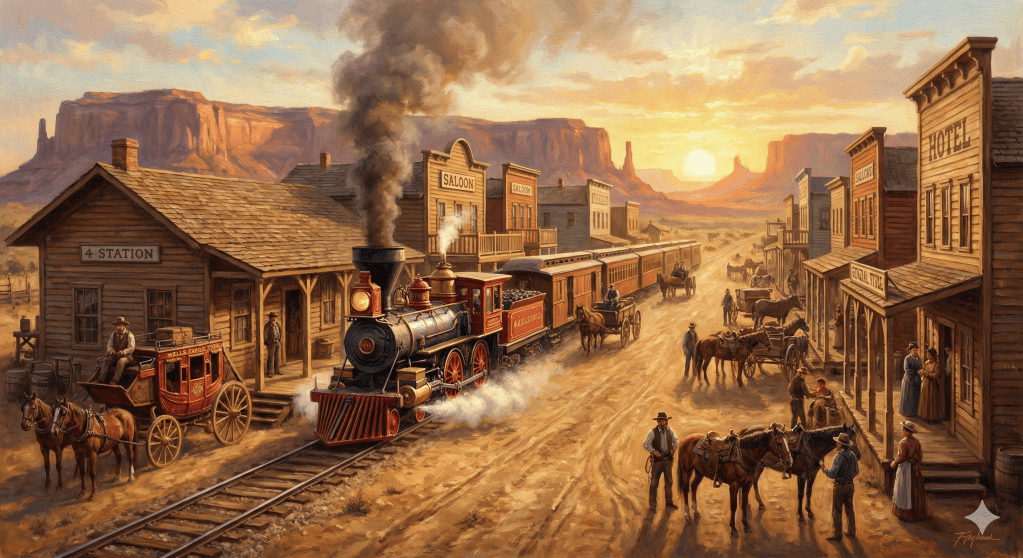
In many parts of the USA, small towns were supported by a new technology, railways. Cheyenne, Wyoming began as a railway town, so did many other places. The game has to be able to capture this change and vibrancy of the trains steaming into these small towns. The steam train has been a technology that capture the imaginations of that age and they are prefect visual aspects of a video game which can show off the power of an engine.
 My Game Reviews