Google Gemini: The power of photorealism in historical education

I have spoken many times about how great Google Gemini is. Here, I talk about how it can be used in historical education because of its high realism. These are not the stylized images of Dalle-3 but something that has weight in the depiction of reality. This ability to recreate reality is very important in education as ChatGPT and Google Gemini already have research tabs to allow for students to improve their understanding of the past.

Middle Class young woman in Martinsburg in 1840 era.

The image above comes from the prompt: Create photorealistic image of a young Middle Class woman in Martinsburg, Virginia in her room in 1840 era.

Such AI generations are more accurate than previously and you can ask Gemini to elaborate on these images, especially if you see something incorrect in the image.

One such elaboration beyond correcting anachronisms is the ability to label everything in that image. Here is an example.

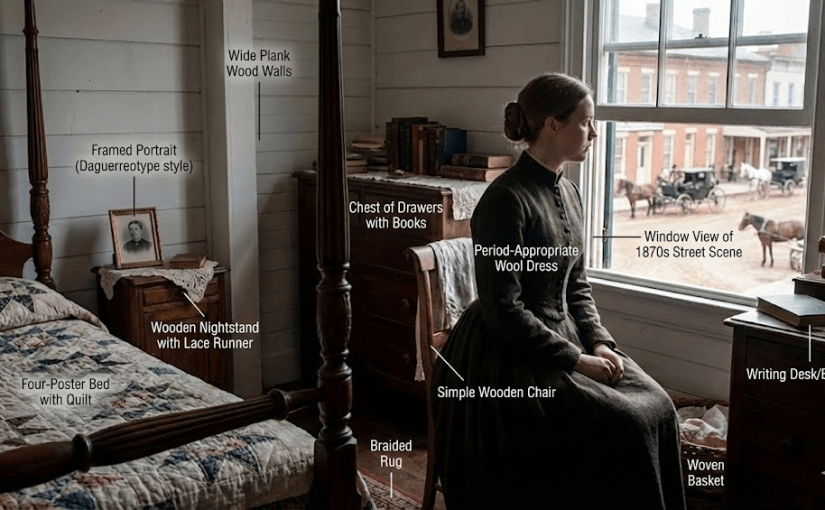
Google Gemini creates a Photorealistic image of a young Middle-Class woman in Martinsburg, Virginia in her room in 1870 era.

The image above comes from the prompt: Create photorealistic image of a young Middle Class woman in Martinsburg, Virginia in her room in 1870 era.

Next I use the prompt for the chatbot to label the photo: Take this image and label everything that is historically relevant for teaching about this age in interior design and style.
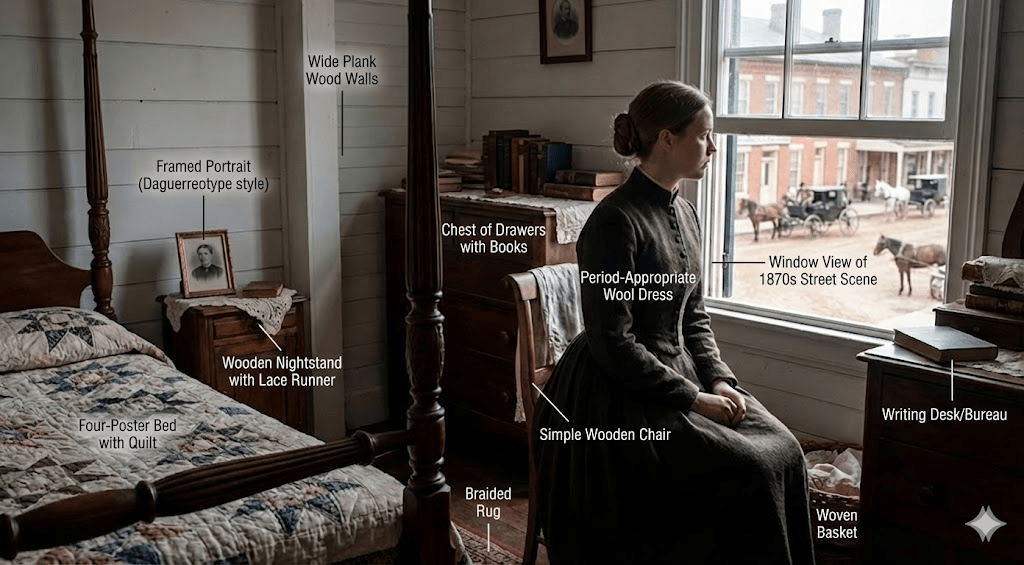
Google Gemini Image with Identifiers on the Image

You would have had to research specific sections separately just to be able to know what each of these elements meant in context. Such a tool as Gemini proves that AI is not just about “taking” people’s jobs or hobbies but enhancing them and making look at our surroundings more closely.

The implications for education can revitalize a rather stagnant profession. This can be way of putting in Socratic thinking into schools, connecting ideas in concentric relationships instead of the linear ideas I was exposed to when I was in my schooling age. There will be people who criticize these tools for stealing people’s art or photographs. My response is that we should be heterodox on this issue.

Chatbots such as ChatGPT are only getting more sophisticated at creating historical images. Teachers should be attempting to use these tools and encourage their students to learn how to use them.

There were many early stories about students using ChatGPT in order to cheat. Now is the time to be able to help students use these tools to understand the nature of their history and societies.

ChatGPT Deep Research Tutorial for High School Students

ChatGPT Deep Research

ChatGPT is changing the world of education, and I hope to be able to help make the process more usable for students specifically in the High School settings.

A new feature is available in the new versions of ChatGPT known as “Deep Research”. Basically, it makes ChatGPT spend lots of time looking through every source of information available to give you the best answer for you to do research on your topic.

Using this process requires that you are subscribed to ChatGPT Pro.

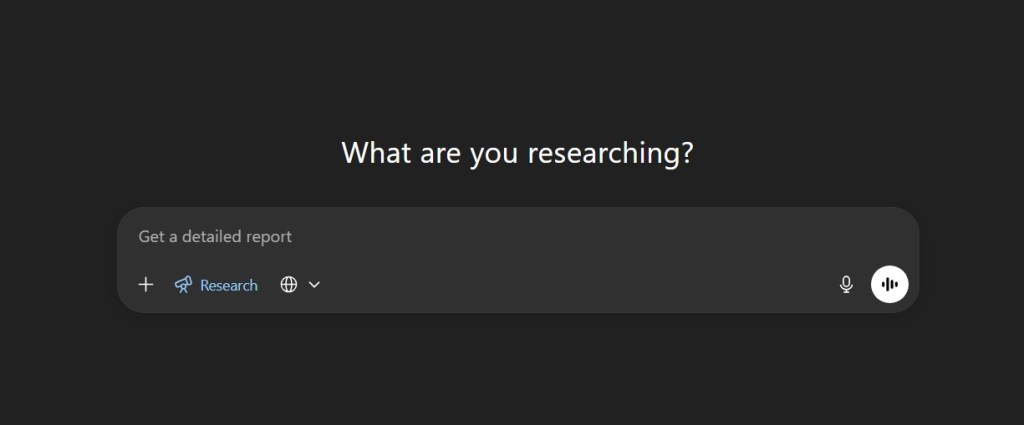
Step 1: Use the Deep Research button on the chat box in ChatGPT

Click on the plus sign on the chat box in ChatGPT.

Then scroll to the Deep research with the telescope icon and click on the button.

ChatGPT Deep Research Icon Screen

Step 2: Ask your question

The next step is to type out your question. In this case, I chose to ask about the Roman army under the first Roman Emperor, Augustus. It would be wise to make sure you clarify specifics.

ChatGPT Deep Research History Questions

ChatGPT will ask you what you to focus on. Choose a topic that is relevant to your research.

Step 3: Focus your research

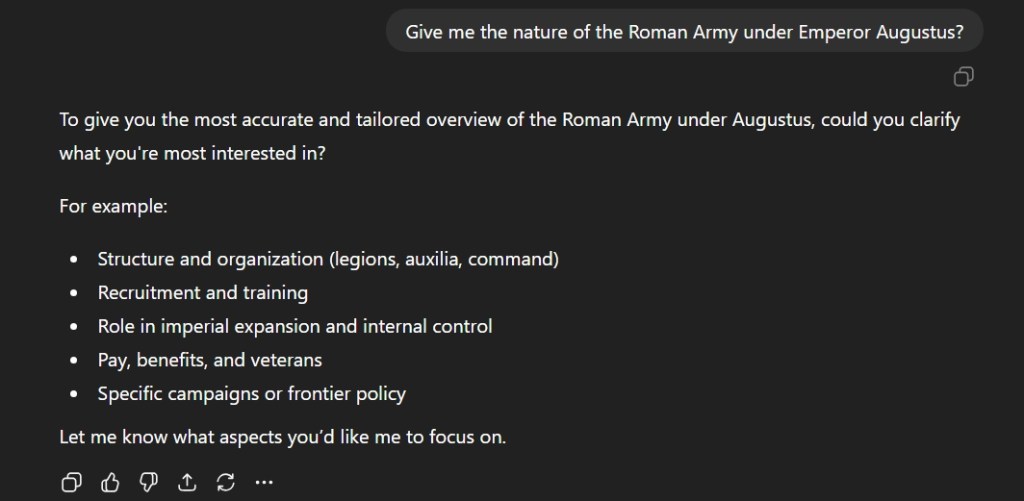
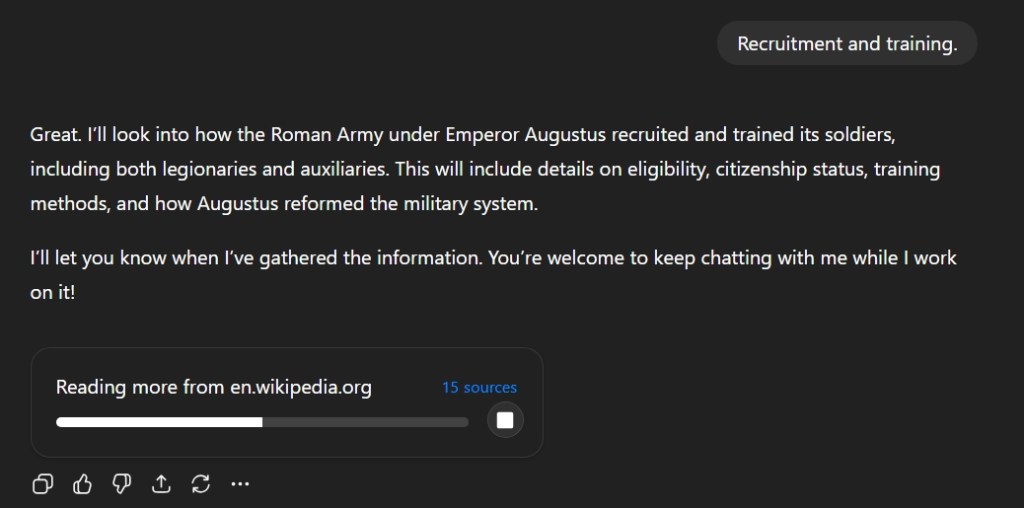
I selected Recruitment and Training and the chatbot begins its research on various sources.

ChatGPT Deep Research Sources Screen

This process takes time and will take about 5 to 7 minutes depending on the topic. ChatGPT will show you what sources it using to conduct its research while the process is undergoing here.

Step 4: Check the results

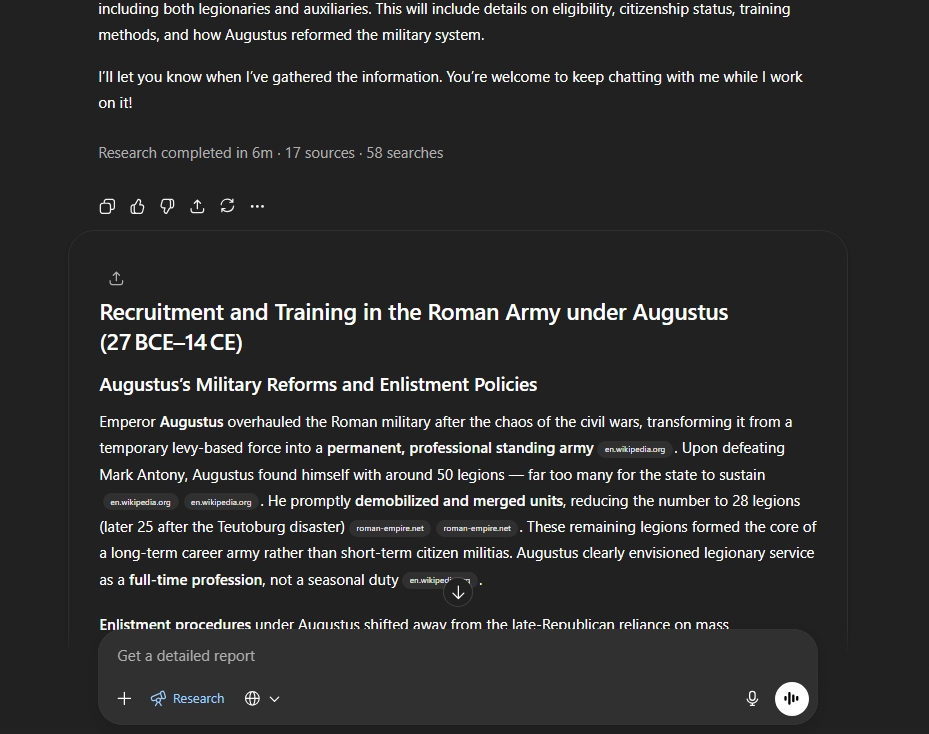
ChatGPT will save you time. It will summarize many websites into a single response which will have hyperlink bubble located next to the regular text. Clicking these links will take to the websites so you can expand upon your research.

ChatGPT Deep Research Sources and reports

This tool will greatly help in research here.

Step 5: Integrate your research with original ideas

This is probably the hardest aspect of using ChatGPT here. Many students simply want to complete the homework without effort. This has been covered in publications multiple times. However, it is clear that the tool is here and its time to use to help reinvigorate an often-stale teaching profession. Students need to enhance their thinking and not let a machine replace it.

Civilization III: China shoots down ICBMs in the 2nd Nuclear War.

Civilization III is proving to be a truly amazing game. Persia attempted to attack me once again, this time with ICBMs. My previous war with them had put so much pollution onto the planet that the sun image was red and my environmental efforts were going nowhere. Recently planted forests were becoming grassland as the planet became filled with nuclear radiation. However, peace was far away and the war had to continue.

I had a peace treaty with the Persians while the Koreans barely managed to hang on with their own treaty. The Persians simply had too many tanks and I lacked oil and aluminum to have an armored army to counter the Persians. As a result, I relied heavily on TOW infantry and huge amounts of artillery located across the mountain passes to slow them. I then used tactical nukes onto the capital of Persepolis and other major cities multiple times to cut the empire from resources and luxuries. However, they kept sending tanks and mechanized infantry into the area around Tokyo and Osaka; I had to make peace as I was basically in a stalemate and move to peacetime economy so that my cities could get new infrastructure in order to compete with the Persians.

However, I didn’t have all the time I needed to prepare for war with Persia. I was building ICBMs to counter their military. I also ordered my city governors to build a huge air force, a part of our military which wasn’t a factor in the previous war. The main issue was always the tanks and infantry fighting vehicles. Persia had tons of such machines. I had only recently built a city on top of an oil deposit in order to start building huge amounts of bombers and jet airplanes to counter this huge, mechanized army. However, no matter how well bulit ones plans are, only experience manages to tell us the truth or show the durability of our ideas.

The attack began without warning on China.

In Civilization III, the AI is very aggressive in comparison to the later versions. Some of this is what it has to work with. The game is simpler in a sense than the games that came out later. It is not a game that the AI has a hard time understanding the rules. Under the hood, however, the game is similar to Civ 7 except in the Hexes and some of the rules. The hexes in my opinion messed up the Civilization series. Squares were just easier for the AI to handle.

The result is that the AI is competent in a war and is an actual threat. In strategic thinking, the AI in this 2001 game is still behind the human but it is clear that they were planning to attack me with nukes for some time. I was in their way for domination of the globe and I was ready for their attacks.

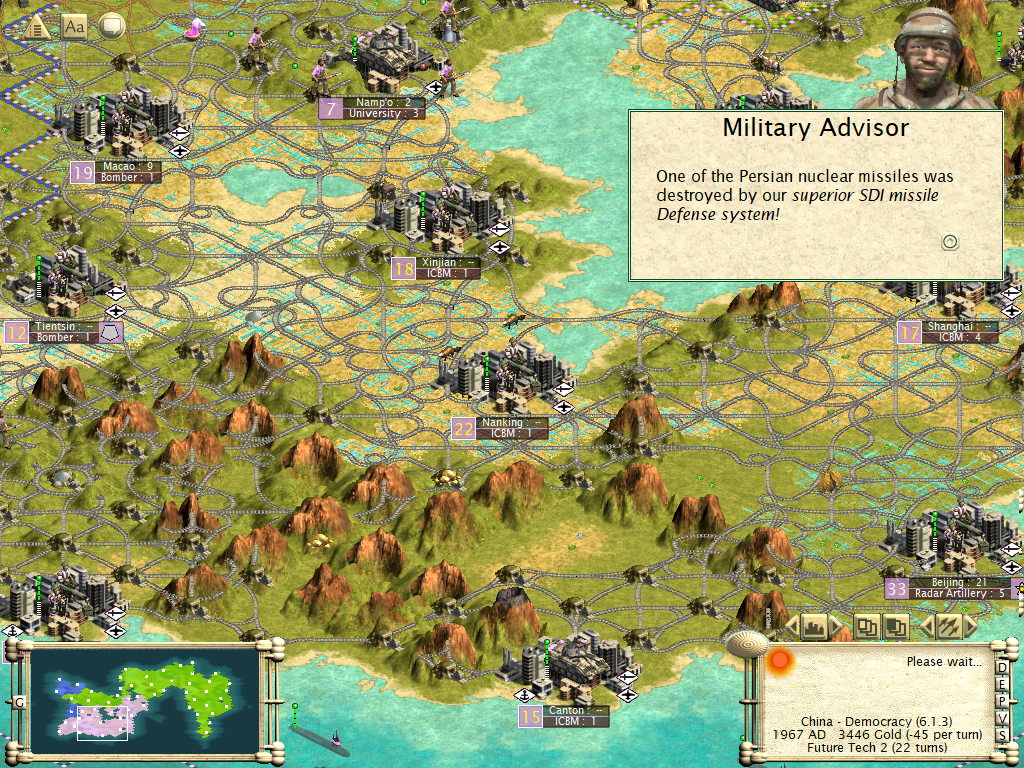
Beijing, once again, was hit but my SDI system was able to defend the nation from attacks. As a result, my workers would not have as many duties at repairing the radiation and damage that was caused by the ICBMs.

This is actually the only time I have seen the SDI small wonder in action.

This is why I love Civilization III. You get to run a nation in the late game, and it is truly wonderous. This why Civilization VII was able to reach its heights.