Google Lyria is a useful platform for making AI music. I have already written about how to use Google Lyria in order to make songs on the platform here.
Here is how to make longer songs on Google Gemini with Lyria.
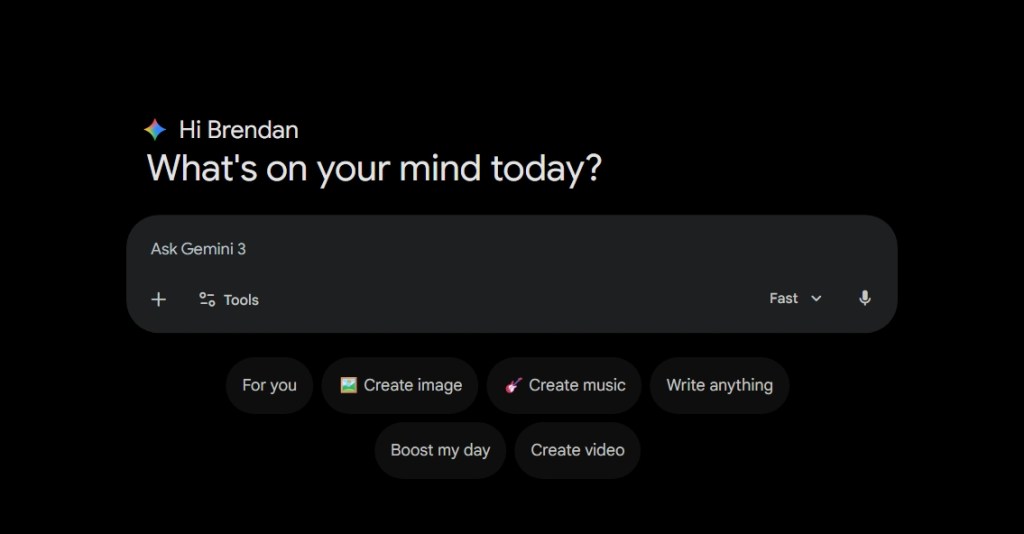
Step 1: Go to Google Gemini and Select Create Music
Step 2: Select Create music and make sure the model is on “Thinking”.
Step 3: Write in your prompt
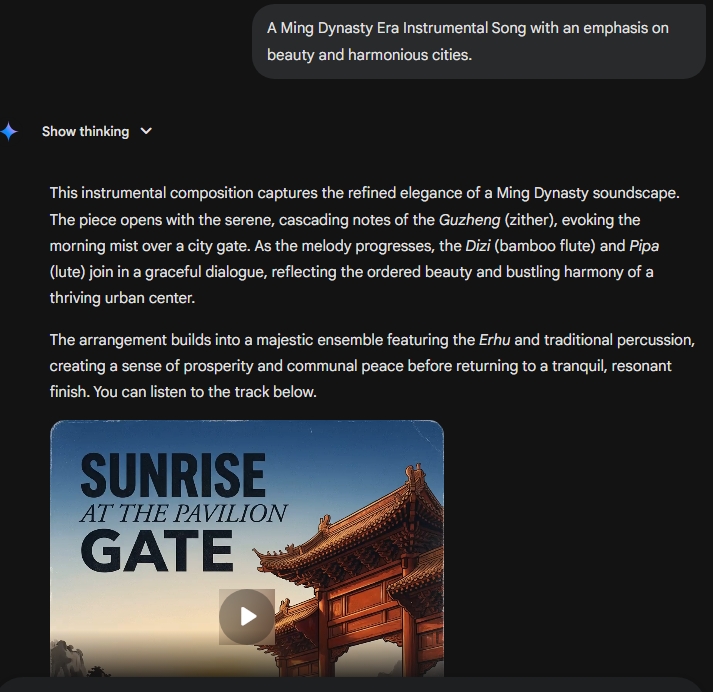
Step 4: Analyze your results
Once Gemini is complete you will be able to hear the whole song. When the model is on “Thinking”, it is able to create roughly three-minute songs rather than the default 30 seconds on “Fast” settings.
Within the result, Google Gemini’s Lyria music creator is able to describe the multiple instruments involved in the creation of the song here.
The song is now available for download onto your PC or to share on social media.
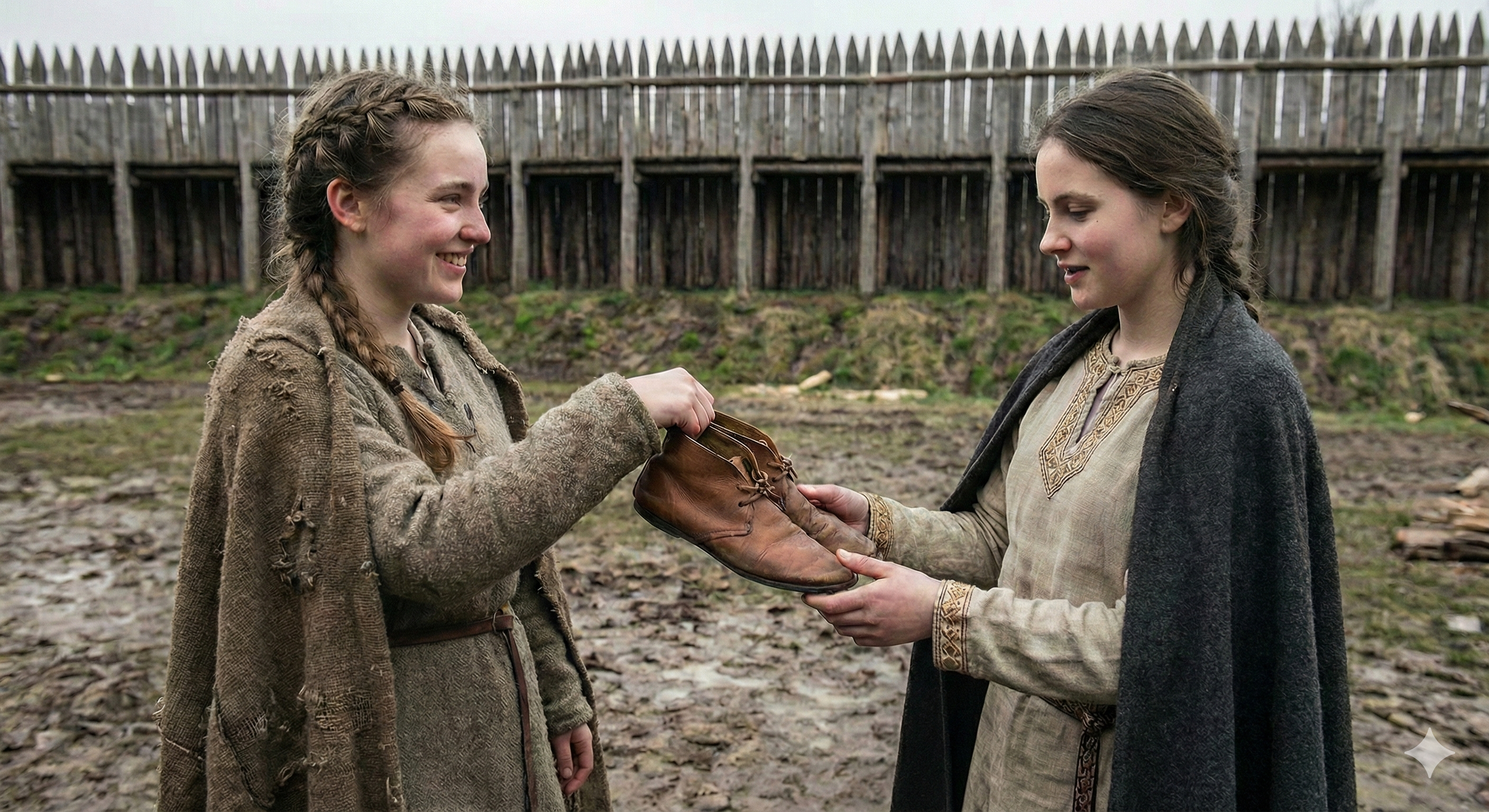
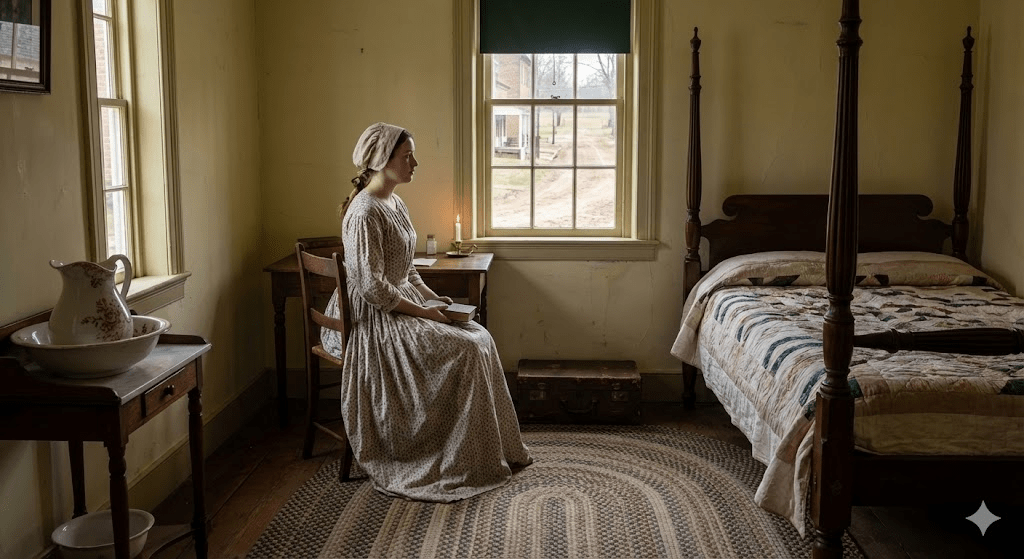
I have spoken many times about how great Google Gemini is. Here, I talk about how it can be used in historical education because of its high realism. These are not the stylized images of Dalle-3 but something that has weight in the depiction of reality. This ability to recreate reality is very important in education as ChatGPT and Google Gemini already have research tabs to allow for students to improve their understanding of the past.
The image above comes from the prompt: Create photorealistic image of a young Middle Class woman in Martinsburg, Virginia in her room in 1840 era.
Such AI generations are more accurate than previously and you can ask Gemini to elaborate on these images, especially if you see something incorrect in the image.
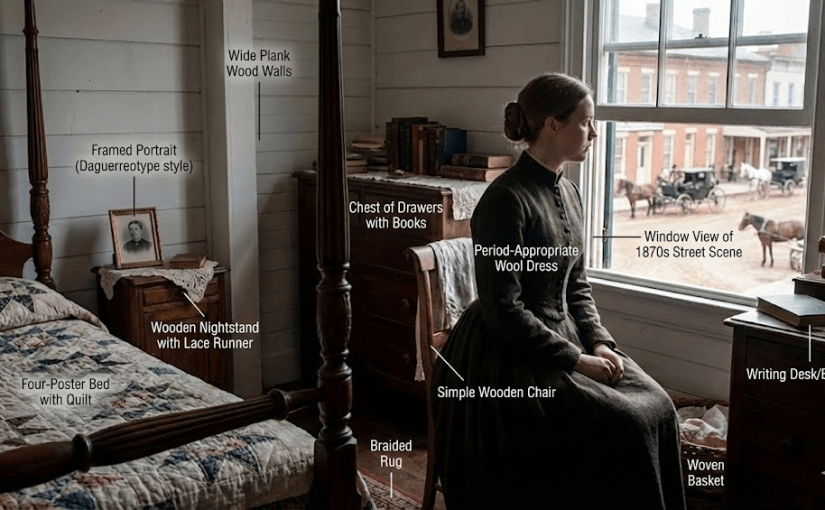
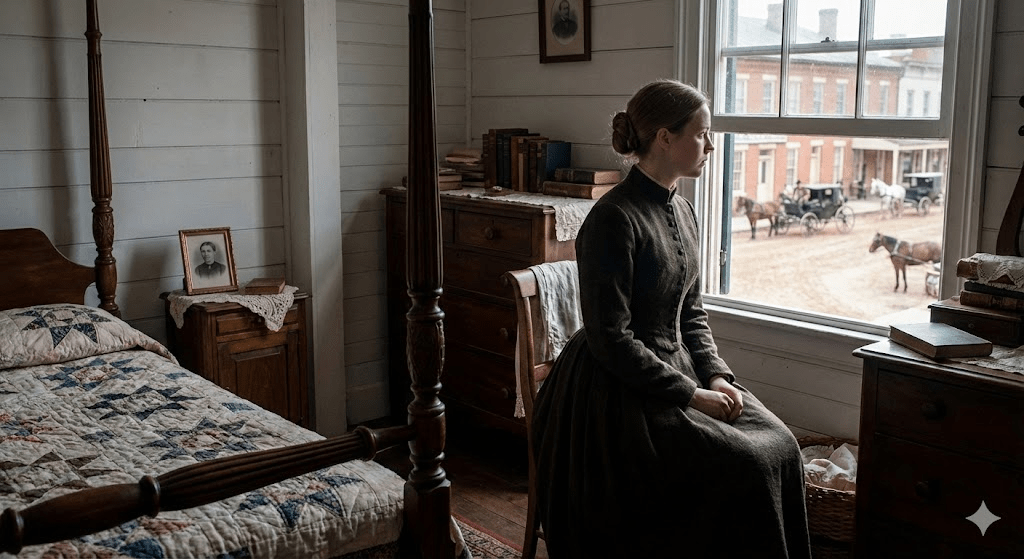
One such elaboration beyond correcting anachronisms is the ability to label everything in that image. Here is an example.
The image above comes from the prompt: Create photorealistic image of a young Middle Class woman in Martinsburg, Virginia in her room in 1870 era.
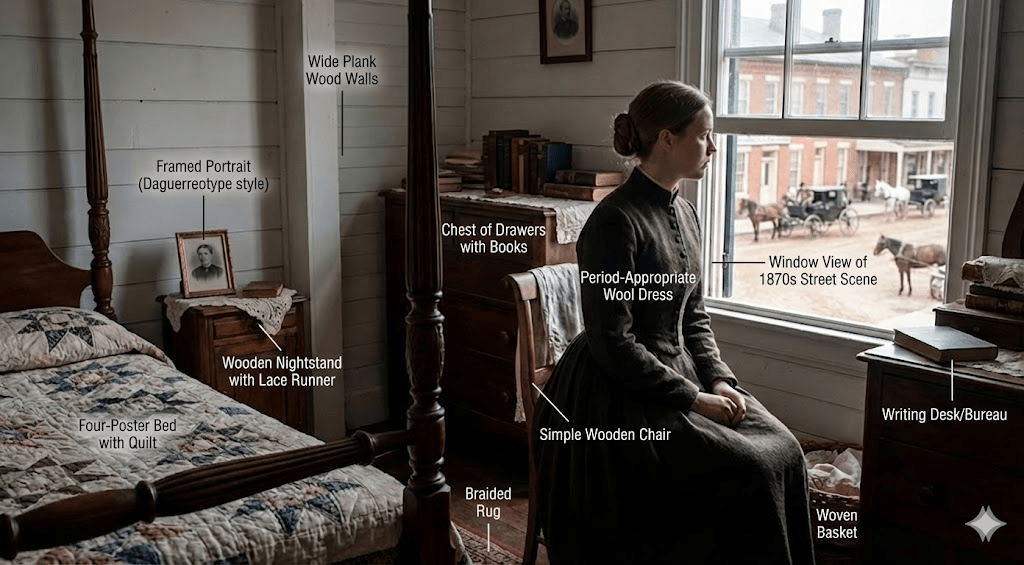
Next I use the prompt for the chatbot to label the photo: Take this image and label everything that is historically relevant for teaching about this age in interior design and style.
You would have had to research specific sections separately just to be able to know what each of these elements meant in context. Such a tool as Gemini proves that AI is not just about “taking” people’s jobs or hobbies but enhancing them and making look at our surroundings more closely.
The implications for education can revitalize a rather stagnant profession. This can be way of putting in Socratic thinking into schools, connecting ideas in concentric relationships instead of the linear ideas I was exposed to when I was in my schooling age. There will be people who criticize these tools for stealing people’s art or photographs. My response is that we should be heterodox on this issue.
Chatbots such as ChatGPT are only getting more sophisticated at creating historical images. Teachers should be attempting to use these tools and encourage their students to learn how to use them.
There were many early stories about students using ChatGPT in order to cheat. Now is the time to be able to help students use these tools to understand the nature of their history and societies.
ChatGPT is getting better at making images efficiently. However, Gemini is still better at making photorealistic images, but the gap is not as big as it once was.
Gemini’s ability to recreate reality will be very important when it comes to history education. The ability to create photorealistic depictions of pre-photographic eras is going to change the teaching profession here. We will now be able to go beyond looking at photographs on Google or Bing Image search.
People on the internet have been quite lazy in recent years, and human created content needs people to go outside and actually photograph things and also make drawings. However, we are not seeing that, so Gemini is giving us the next best thing here.
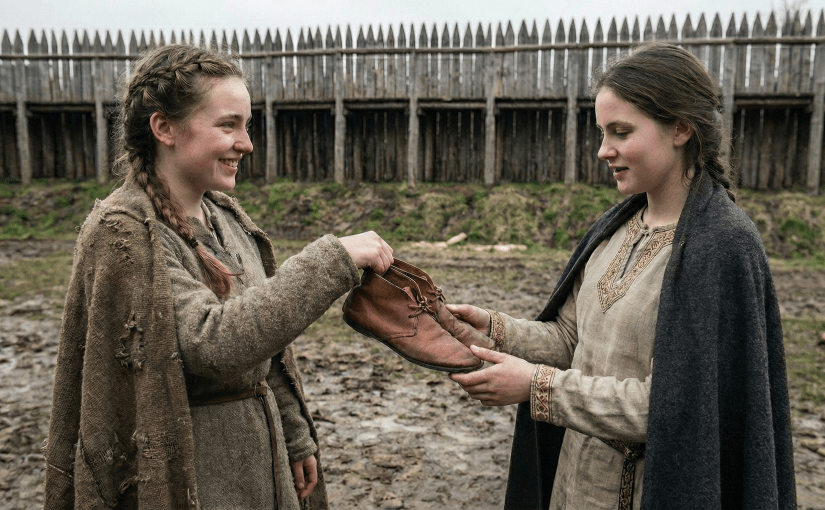
The image above shows us the power of Google Gemini here. Images can now give us the ability to recreate social relations and see clothes and architecture across the ages.
The days of Dalle-3 making mistakes are now in the past.
Considering it was only really a couple years ago, and we now have photorealistic images of historical ages.
Instead of using static textbooks, we now breathe life into these textbooks with AI.
Many establishment people may not like having this happen. These institutions have ossified and are unwilling to change.
Education now has another chance to change. This change will make history education more accessible but also increase thinking about other cultures and history of social class in other eras.
People should try to embrace it rather than being so defensive about it. In my experience, High School was a real bore with teachers in front of the smartboard but not using it. Students have not been trained by parents and their community to truly care about their education beyond the grades. With LLMs we now have the ability to change that here.
Education can now truly become interactive and intriguing to students.


 My Game Reviews