In Science-Fiction, space is the great frontier that every author focuses on. However, the waters are as important as the deep expanses of space. Empire Earth clearly shows that the battles in the oceans of Earth will be as important.
In one of my games that I started as a skirmish on a Mediterranean map. I was engaging a rival computer player with my computer ally. This was on Easy and yet the AIs were acting in their usual dumb ways. They would have moments of brilliance but then spend time attacking walls slowly instead of building their economies.
I took a leisurely pace with the game, not spending too much time worrying about the AI.
When I was ready, I began preparations to strike.
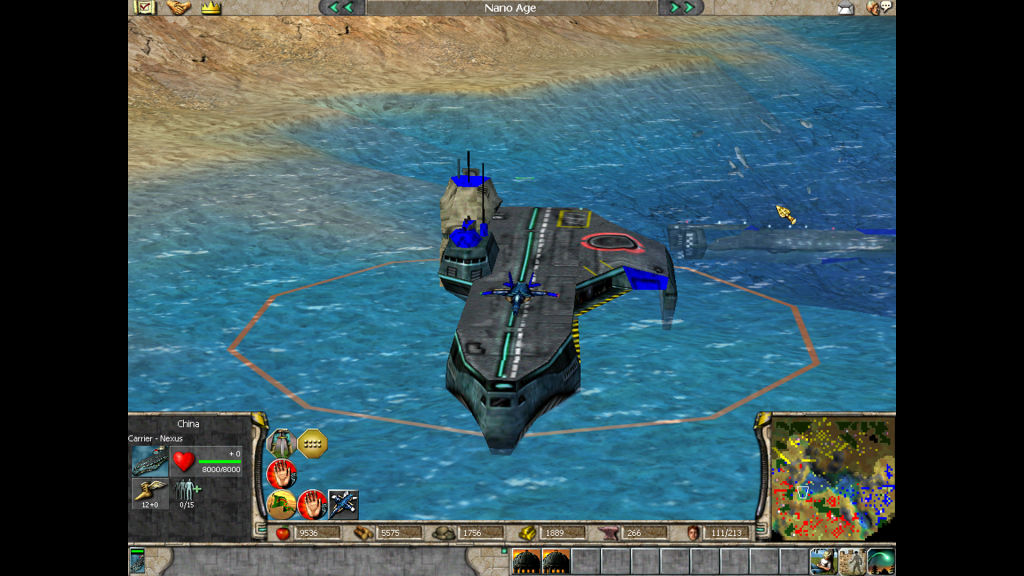
The Naval battles in the Nano Age are quite exciting and have some weight to them. The developers really put effort into this section of the game, giving the ships a distinctive look in comparison with what we know in our current age.
When you see the submarines in the Nano Age, they are sleeker and have more angular structures to them. Most science fiction has a tendency to ignore the submarines also.
The inclusion of blue water ships in science fiction is something we should see more of in video games. It helps to revitalize a genre that sometimes get too stuck with space.
With ChatGPT being so popular, I made a trip back to one of my favorite games, Empire Earth.
When I used to play this game as I was younger, there was a sense of how annoying it was. The AI in random matches and campaigns was often cheating constantly. While I understand that Computers cannot really match the thinking of a human, it is really frustrating to see the AIs cheat their way through a game.
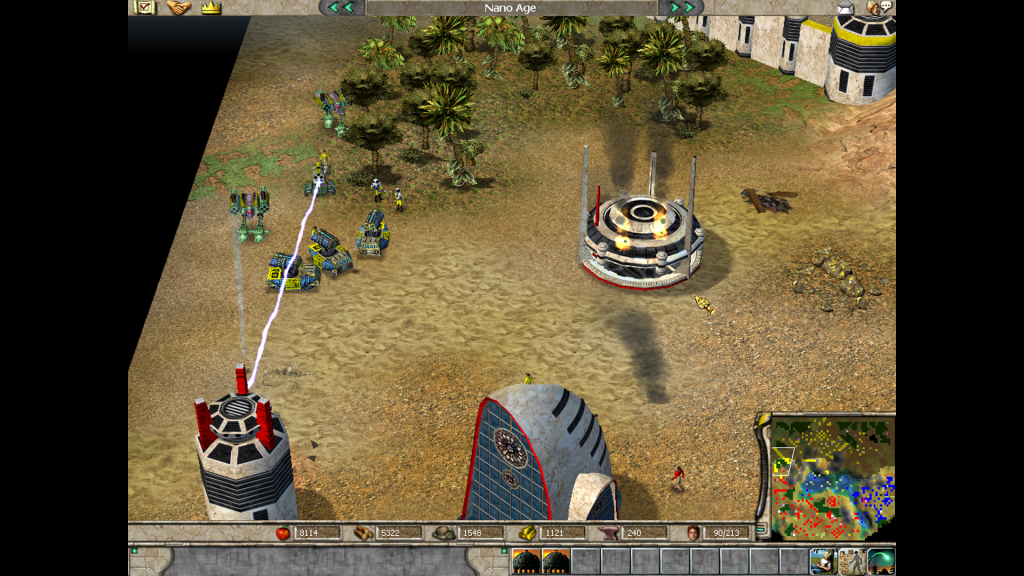
In the above screenshot, you can see an example of how the computer is limited in its thinking.
As soon as I bulit three wonders, the AI makes a beeline to attack it. It is very obvious and it is clear that the AI running on a script and its not very creative here.
I was playing on the settings Small, Mediterranean as it is my most favorite of the maps,
However, there was another sign of the AI cheating here. Wherever there is water, the AI sends its citizens to go build on the shore just to make sure it has a dock ready to pump out some ships to harass me.
The AI knows where to harass me, which is typical in these games of this era.
There is one thing that I do enjoy about it cheating, however. The AI is aggressive even on Easy. There is one thing to say about the AI on the Easy mode; it isn’t easy.
The AI is challenging for sure and that makes the game worth playing in this current age of handholding and mobile games.
The Original Empire Earth came out in a time when expansion packs were still packaged in boxes. The cover of the Art of Conquest expansion features a Roman legionary, probably a centurion in his armor.
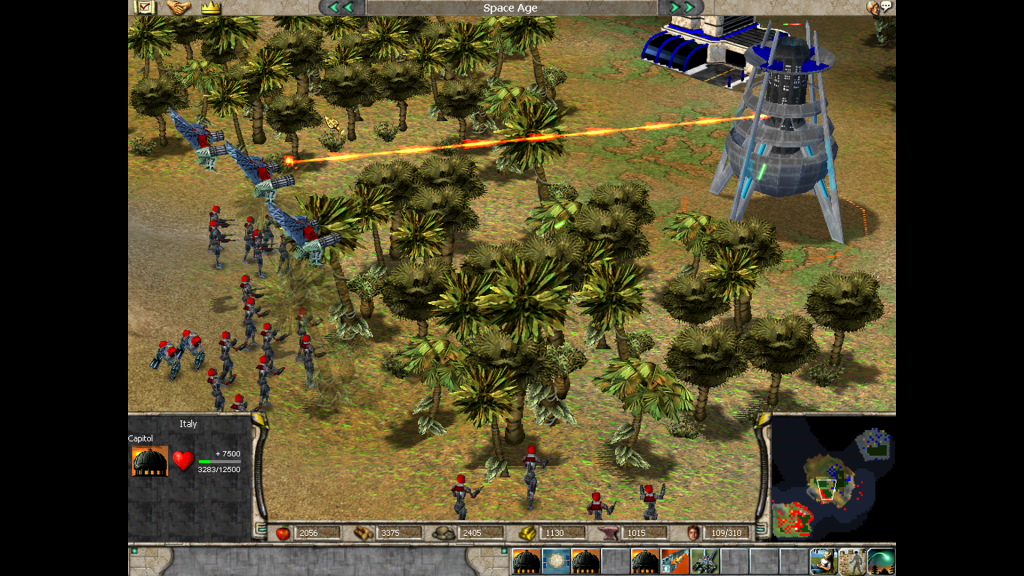
Inside the game, there was inclusion of a strange aspect to the game known as the Space Age.
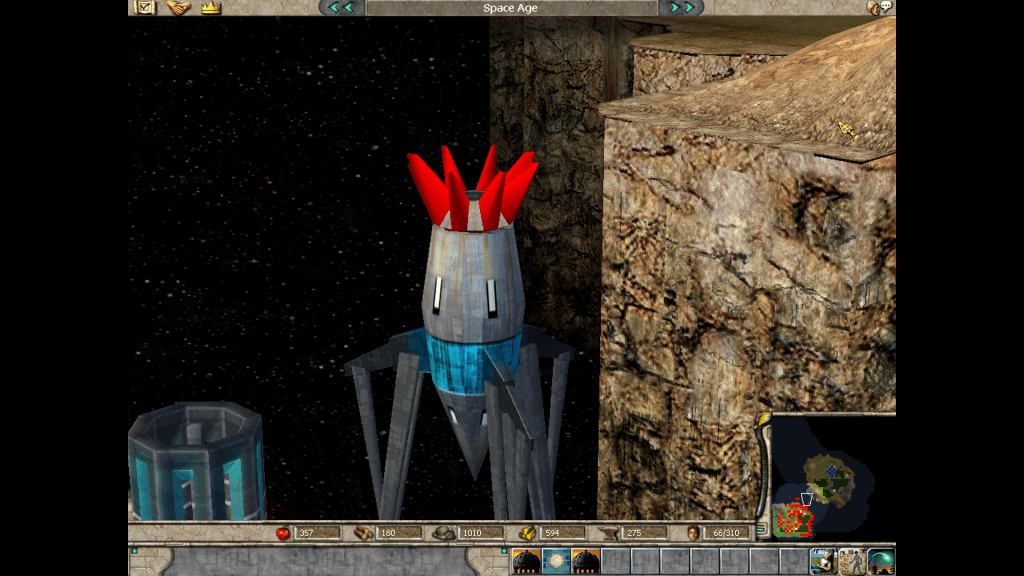
In this screenshot above, you can see the stars in the background, beyond the Space Age tower.
It is quite apparent that the developers were ambitious with this expansion. Whereas they could have spent the time putting more focus on fleshing out the various civilizations in the game, they spent it on adding an entirely new part to the game, namely space.
In some sense, it is clear Empire Earth’s engine just wasn’t up to the task of rendering space.
When one looks at the planets in Empire Earth, they look like floating pieces rock in some High Fantasy story that have been transferred onto the great vastness of space. In my opinion, it looks out of place here
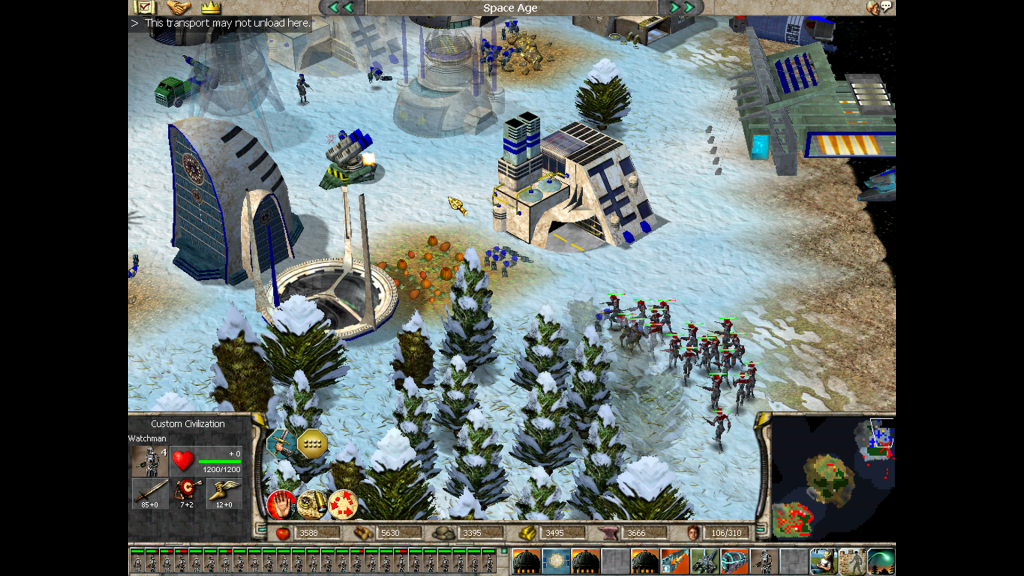
Space in Empire is similar to water but there is a big distinction here. There are no resources available in space. Everything that you need has to be on the land parts of the map. This means that space is merely just a physical barrier, which separates you and your opponents.
The walls in the Space Age get an upgrade. In this age, they shimmer like force fields in Star Wars. Stylistically, they are not as imposing as the Laser Walls that appear in the Digital Age.
The Clunky nature of playing a 2002 game
I remember playing Empire Earth in 2002. I did not touch the expansion at that time.
Now that I am playing it with having more 20 years of foresight, I can see how old software is having issues playing on what would seem like a supercomputer in those early Aughts.
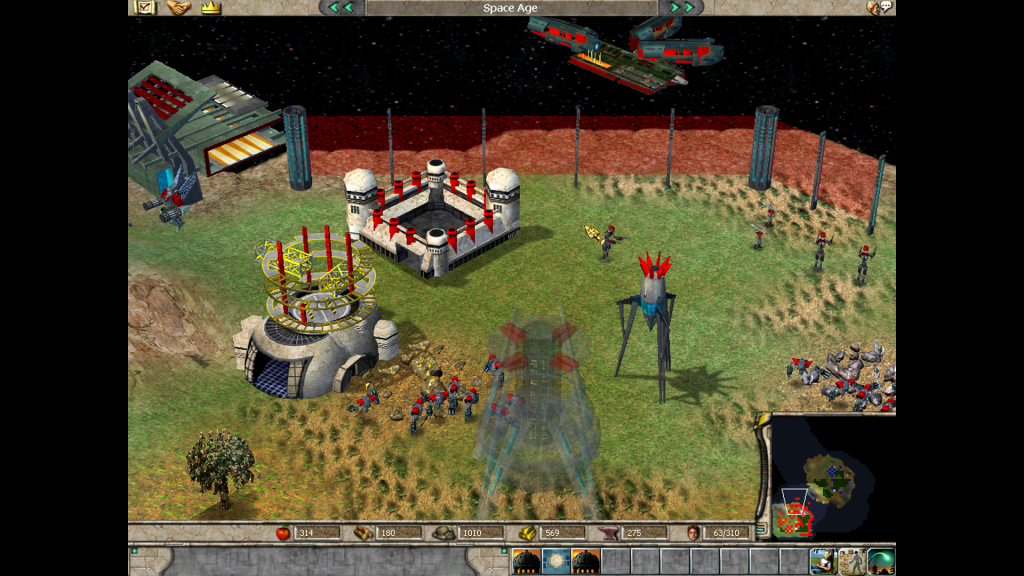
In the game that I was playing, the game was running slow as various robotic citizens were being added to my planet. It was clear that the game was not optimized properly for modern computers.
GOG.com has done a great service for bringing older games back onto the computers of gamers.
The Space Era in the Empire Earth: Art of Conquest expansion is still worth playing now.
What makes it exciting is that clunky integration of space and land into the game.
Empire Earth in its futuristic ages has something that the sequel does not have; it simply seems more holistic.
In some sense, I can understand why Empire Earth is still more popular than the sequel. That ability to build move units and build buildings wherever you want is important aspect of the game.
As I play the Space Age of Empire Earth: The Art of Conquest, I reminded of how games were once affordable and were actually worth the time and money you spent on them. That is why Empire Earth still holds a speical place in my gaming catalog.
Sometimes, a bit of clunkiness goes a long way to building character.





 My Game Reviews