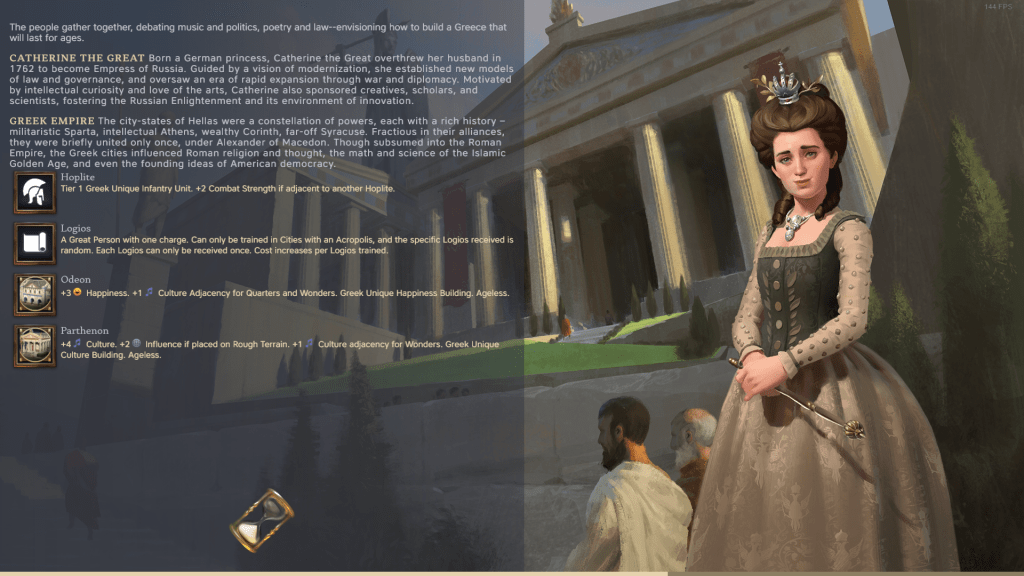
Civilization VII is going to be one year old this week, and it is clear that the game is struggling to compete with the fifteen-year-old Civilization V and also its immediate predecessor, Civilization VI. This is clear sign of a game that has not met the expectations of the fans of the series and the casual audience that should have been flocking to this game which had multimillion dollar marketing and a pedigree behind it. This is a sign that the series in its current trajectory has played itself out and needs to return to what makes Civilization great. It needs to be an experience of constructing a breathing world in an history sandbox.
The developers didn’t even bother to have England as a civilization on launch. They were putting content behind walls and making you, the consumer pay more for at best a mediocre game. This microtransaction method is flying in the face of the fact we used to get a full game on launch with the previous titles. They sold England as an microtransaction like a piece of scrap to make more money on a project which was lacking energy and any sort of vision that went beyond deconstructing their own game.
I have spoken a lot about the issues of Civilization VII and why it is inferior to the previous games:
- There is a lack of an emergent story
- Empire Earth is better than Civilization VII
- Civilization VII provides no context for your civilization and its citizens
- Civilization VII is worse than Civilization VI
- Civilization VIII is going to made more quickly in comparison to Civilization VII
- Civilization VII is style over substance
- Why Civilization VII is a terrible game: Civilization VII should have been a PC-Centric Game
- Civilization VII is a game without a soul or passion
- Civilization VII does not get it audience
- Civilization VII is not a great game
- Civilization VI vs Civilization Player Count on Steam
- Why Civilization 7 is not successful: It is 3 Mini Games in One
- Why Civilization VI is winning the war with Civ 7
- Is Civilization VI still worth playing in 2025?
Another issue that I haven’t really spoken about is the need for competition. Civilization VII’s failure can be seen as the inevitable decadent phase of every human endeavor. The soul of humans extends to the objects we make here.
Civilization VII was taking the fans for granted in a sense. It is decadent style over the shallow substance.
Music is great and graphics are good, but that cannot sell a game anymore like in the past. You need to have good gameplay, especially if you want players to stay around in here.
Civilization VII is basically 3 mini games in one. The game deliberately takes away choice from the player. You reset every single age, and I find such a mechanic not something that really fits with Civilization. The blobbing issue with players becoming too powerful was just a part of the game. The developers were concerned about that too much. Civilization is not a game that is meant to be solved but experienced holistically. The approach they took to fix this issue was taking away the soul of Civilization. These games are sandboxes not linear experiences with some flexibility but one is aware that these games want to focus on the structure of that game.
Civilization games tend to be more focused on making a world rather than just playing a game. That is why the atmosphere of the Civilization games is really important. Civilization II, while an ancient game now, had FMV(Full Motion Video) of actors as the advisors. That creates character and somehow they have taken it out of the recent games. It is too much of a board game. While that may appeal to mostly console gamers, the PC genre is where the true spirit of the Civilization series is. They made a choice of porting it consoles just to squeeze out more money and that did not help the game.
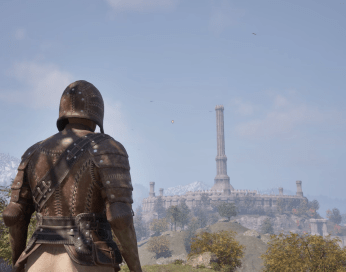
Why is that Kingdom Come Deliverance 2 is still doing well on Steam Charts a year into the game been on Steam? It’s because the game appealed to its audience, regardless of the creative choices. They kept the spirit of the original game alive in the sequel and improved upon its core gameplay mechanics. When you look at the voice actors in the behind-the-scenes videos or promotions, they seem to be putting energy into the project. Caring about a paycheck isn’t enough, you need to impart your own personal spirit into whatever project you are working on. Civilization VII has only a small amount of that in there, mostly in the music in my opinion. Everything else is pedestrian in its quality in comparison to the previous games.
Civilization VII was looking for an audience which doesn’t really care about Civilization. That’s why the game is struggling to compete with the older civilization games.
The game needed real competition. The video industry has been clustering around the same developers who have gotten comfy having no one to challenge them. Civilization VI began showing this complacency and Civilization VII shows that the series needs to be made anew.
To make a new civilization game, the developers need to return to the roots, and that means Civilization I. Make it simple but complex enough for the modern age of gaming. They need to remove the board game mentality and leave that for an offshoot here. would have given us a real Civilization game.
The important thing is that they need to appeal to the fans and expand their audience without sacrificing the spirit of the original games. Simplicity in video games is really though now with Unreal Engine being so popular but there is a hunger for it which is different from previous gaming generations. People want style not photorealism and I think that bringing that back to Civilization would help to revitalize the Civilization series and return the approval of the fans and casual audiences.
 My Game Reviews